How Businesses Can Maximise Profit with Multi Currency Accounts in 2026
In 2026, international business is no longer reserved for large enterprises. Small and mid sized companies sell globally through online channels, hire remote teams, pay overseas suppliers, and collect revenue in multiple currencies. The opportunity is bigger than ever, but so is the financial friction that comes with it. Every time money crosses a border or changes currency, margin can leak through conversion costs, timing issues, delays, and operational mistakes.
A multi currency account helps solve this by letting a business hold, receive, and pay in more than one currency within a single account structure. Instead of converting constantly, you can keep balances in the currencies you actually use and convert only when it is commercially sensible. That simple shift is one of the most practical ways to protect profit when your business becomes global.
Why it matters in 2026
This matters more in 2026 because global operations are now normal. Businesses commonly face these realities.
- International customers want to pay in their preferred currency.
- Suppliers often want to be paid locally and on time.
- Remote teams and contractors need predictable payouts.
- Marketplaces and platforms settle to sellers in multiple regions.
- Finance teams need cleaner reporting across currencies for month end.
When you run these flows through single currency accounts, the process becomes inefficient. You end up converting too often, losing control of timing, and creating reconciliation work that grows with volume.
The core ways multi currency accounts increase profit
Profit does not increase because multi currency accounts are trendy. It increases because they reduce cost and complexity in ways that compound over time.
Reduce unnecessary currency conversions
The simplest profit lever is avoiding conversions you do not need. Many businesses convert every incoming payment into their base currency and then convert again later to pay overseas expenses. That double conversion quietly reduces margin. A multi currency account lets you keep a currency balance and reuse it when you have expenses in the same currency.
Improve FX timing and cost control
When you can hold multiple currencies, you gain flexibility. You can choose when to convert instead of converting immediately due to account limitations. Even small improvements in timing and pricing can matter when volume grows. The goal is not to predict markets. The goal is to stop converting by default and start converting intentionally.
Protect margin through natural matching
A practical form of risk management is matching your currency inflows with your currency outflows. If you receive revenue in United States dollars and pay software subscriptions in United States dollars, holding that balance can reduce FX exposure and keep budgeting more stable. This is often called natural matching and it is a common reason finance teams adopt multi currency structures.
Speed up cross border operations
Cross border payments can create delays and extra follow up. A multi currency setup can reduce friction by simplifying how funds are prepared and sent. When the account structure supports the currency you need, you can reduce back and forth conversions and manual work around payment preparation.
Reduce operational costs inside financeand operations
Global growth usually increases workload for finance teams. More currencies often means more statements, more manual matching, and more confusion about what happened and why. A well designed multi currency account provides cleaner transaction data, clearer status visibility, and reporting that helps reconciliation. Less manual effort means less time spent chasing issues and more time spent on decisions that improve profitability.
Features to look for in a multi currency account in 2026
Not all multi currency accounts are built for business operations. If you want the account to improve profit, focus on features that reduce friction and improve control.
Broad currency coverage that matches your corridors
You do not need every currency in the world. You need the currencies your customers pay in and your suppliers demand. Start by listing your top five inflow currencies and top five outflow currencies, then evaluate providers based on that list.
Transparent conversion mechanics
A provider should make it clear how conversion pricing works. You should be able to understand what rate is applied, what fees apply, and how conversions will appear in reporting. Profit protection starts with visibility.
Strong transaction reporting for reconciliation
Finance teams need transaction level details that can be reconciled cleanly. That includes consistent references, clear currency breakdown, and reporting that supports your accounting workflows.
Permissions and controls
A business account should support proper access management. You want controls such as user roles, approval workflows, and configurable limits. Multi currency accounts become more valuable as volume increases, so the control layer matters.
Integration friendliness
If your business runs on an invoicing system, an e commerce platform, or internal finance workflows, integration matters. Even without full automation, providers should support exports and structured reports that reduce manual effort.
How to use a multi currency account strategically?
A multi currency account creates the foundation. Profit comes from how you use it.
Use currency balances for operational matching
Start with the simplest rule. Keep balances in the currencies you frequently receive and frequently spend. This reduces unnecessary conversions and makes cash flow planning clearer.
Build a conversion policy instead of ad hoc decisions
Many businesses convert when someone remembers to do it. A better approach is a simple conversion policy. Decide what triggers a conversion, how much is converted, and who approves it. This reduces reactive decisions and helps manage costs consistently.
Invoice and collect in local currencies where it improves conversion
When customers can pay in their preferred currency, conversion can improve. A multi currency account supports this by letting you collect and hold that currency rather than forcing immediate conversion. The key is to choose local currency collection where it improves customer experience and reduces payment friction.
Simplify supplier payments and contractor payouts
Holding the right currency helps you pay overseas suppliers and remote teams more smoothly. It also improves operational predictability since your finance team can plan payouts without last minute conversions.
Real world examples of how businesses benefit
A software company selling across regions collects in United States dollars, euros, and pounds. It keeps those balances, pays region specific expenses in the same currencies, and converts only when it needs to move funds back to the group treasury. The result is fewer conversions and cleaner monthly reporting.
A trading business pays suppliers in multiple countries. By holding the currencies it uses most, it reduces repeated conversion steps and can send payments more consistently. Supplier relationships improve when payments are reliable and predictable.
A marketplace accepts payments from international buyers and pays out to sellers in multiple regions. A multi currency setup helps keep inflows and outflows organised, reduces payment friction, and supports reconciliation at scale.
How INFII fits into this approach
In 2026, multi currency accounts are not only about holding different currencies. They are about running international operations with fewer blind spots. Businesses want to know what happened, what is pending, and what needs action, and they want reporting that reconciles cleanly across currencies.
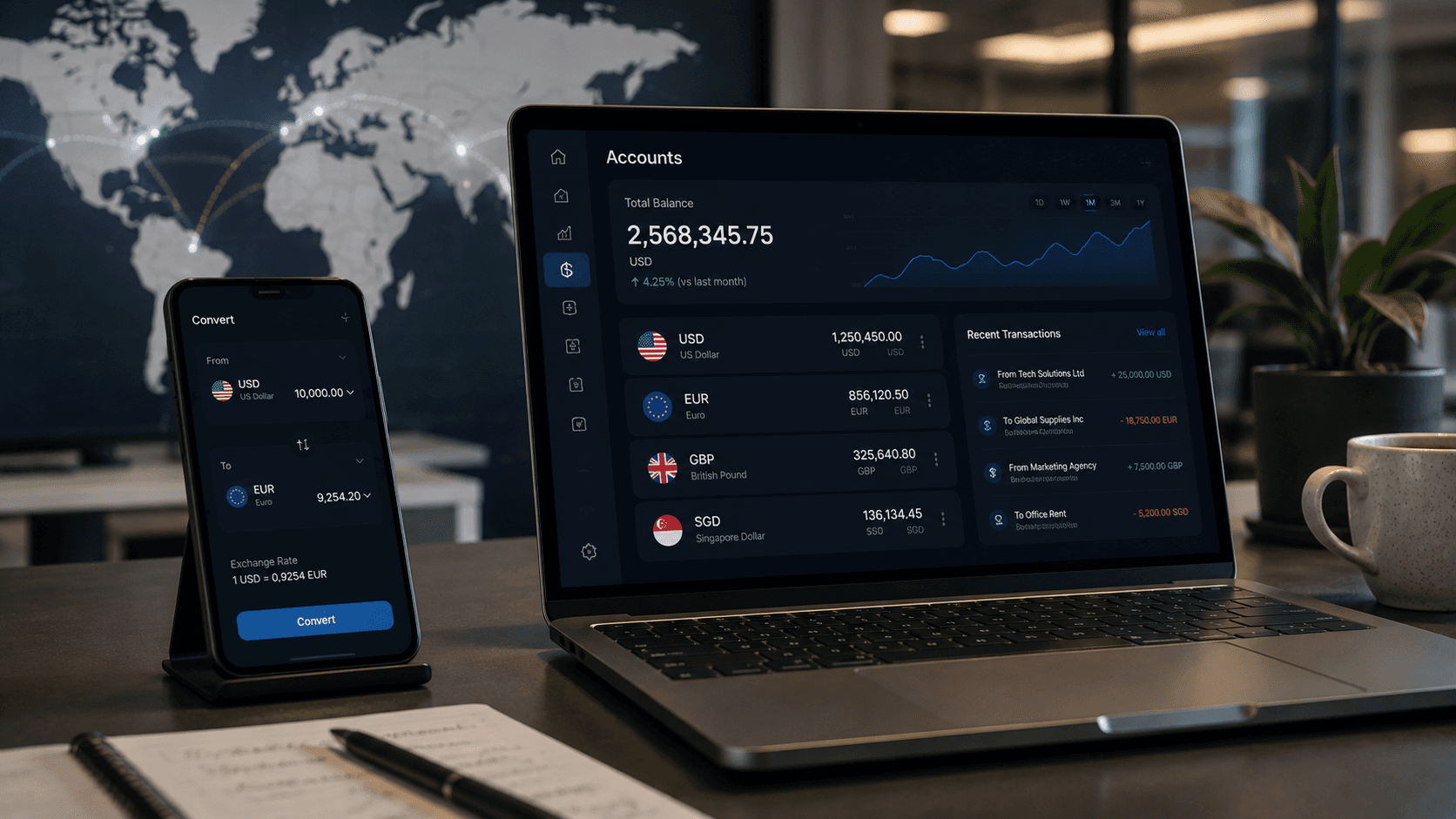
INFII is designed for that operational reality, supporting multi currency tracking, transaction level visibility, and structured reporting that reduces manual follow up. The outcome is straightforward. Teams spend less time untangling cross border flows and more time making decisions that support growth.
Conclusion
A business should adopt a multi currency account when cross border activity becomes routine and when FX costs, payment friction, or reconciliation workload starts to show up as a real operational cost.
The most profitable approach is simple. Hold the currencies you actually use, avoid unnecessary conversions, convert intentionally, pay in the right currency with fewer steps, and keep reporting clean enough that month end does not become a detective exercise. When you do that, international growth becomes easier to manage and much easier to scale.