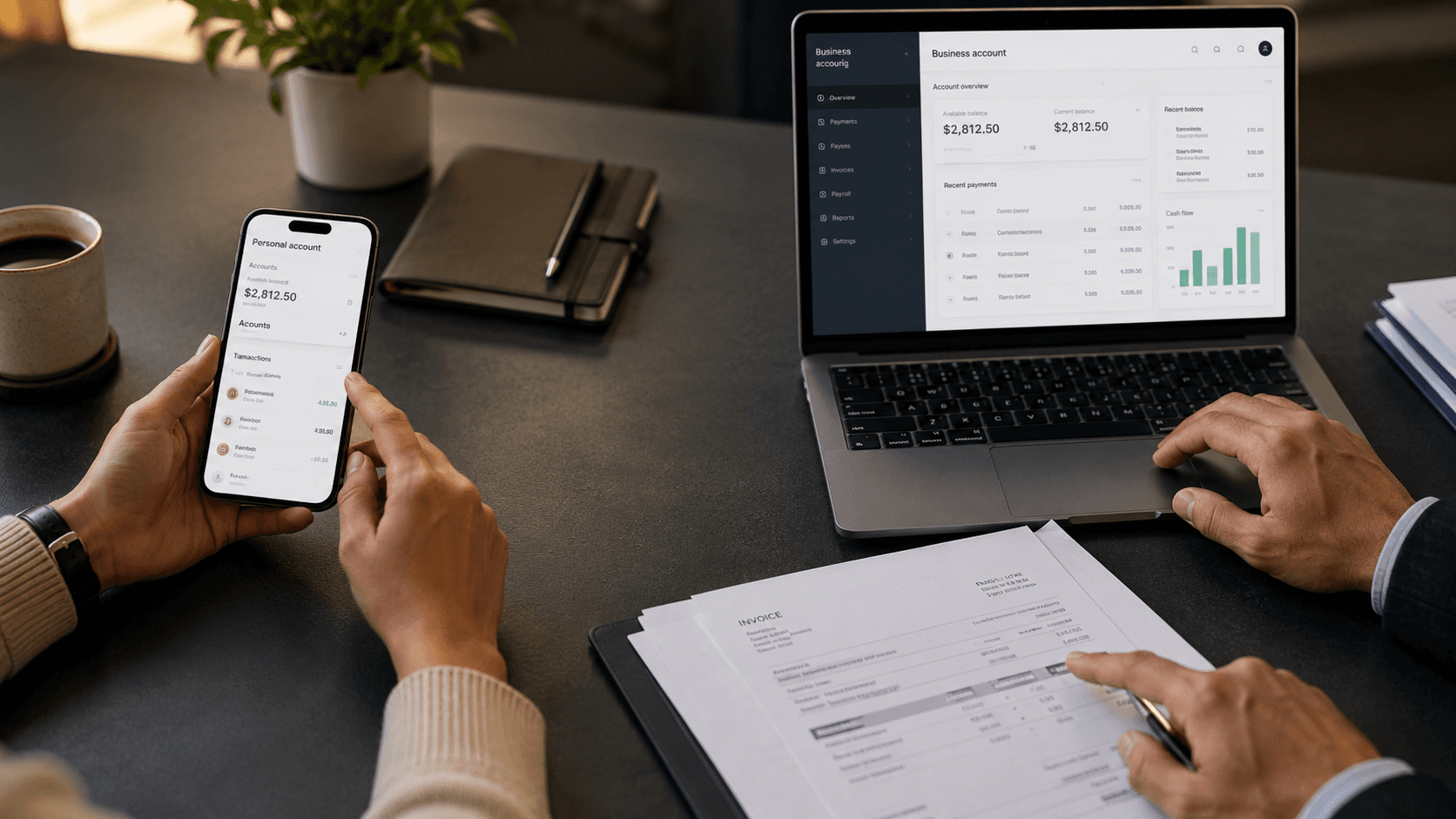
Most businesses start the same way. You get paid, you pay a few bills, and using your personal bank account feels like the easiest path. Then the business grows and suddenly everything becomes harder than it should be. Transactions pile up, taxes becomes very unorganised, and it becomes unclear what is personal and what is business. That is usually the moment people realise a personal account and a business account are built for two very different jobs.
What is a personal bank account
A personal bank account is designed to manage individual income and personal expenses, like salary, household bills, and day to day spending.
What is a business bank account
A business bank account is designed to manage business cash flow and business expenses. It also separates your personal finances from your business operations and can be opened under your business name, which affects how you receive and send payments.
Key differences to know
1) Purpose and usage
Personal accounts are built around individual needs. Business accounts are built around operating a business, which usually means higher transaction volumes, clearer tracking, and tools for managing business workflows.
2) Separation for bookkeeping and reporting
Keeping business and personal income and expenses separate makes bookkeeping simpler and helps you stay organised, because your transaction history is not mixed with personal spending.
This is one of the biggest practical reasons businesses switch, even before they think about anything else.
3) Access and approvals
Personal accounts are usually managed by one person. Business accounts are more likely to support multiple users with different permissions, so teams can handle payments while maintaining control.
4) Business features you do not usually get in personal accounts
Business accounts are often designed to support common business activities such as payroll processing, foreign currency transactions, and other operational needs that do not typically sit inside a personal banking setup.
Many business accounts also support accounting related workflows through integrations or exports that reduce manual work.
5) Credibility with customers and suppliers
When payments are sent and received under a business name, it can improve professionalism and reduce confusion for clients and vendors.
6) Legal and compliance expectations
Depending on your business structure, keeping accounts separate may be more than a best practice. For example, Scotiabank notes that if your business is a corporation, you are required by law to have separate personal and business accounts.
When should you open a business bank account and do you need one
Open a business bank account as soon as money starts moving regularly through the business. In practice, if you are operating a real business, you will need one to keep finances clean and operations manageable.
It is time to open one when any of these apply:
- You are receiving payments from customers consistently
- You are paying suppliers, contractors, or staff on a regular basis
- You want cleaner bookkeeping and clearer reporting for tax and accounting
- You want payments to display your business name
- You need team access with roles, limits, or approval controls
How to choose the right business account
Choose an account that matches how your business moves money. Frequent local collections call for fast domestic transfers and clear transaction references. Overseas supplier payments require transparent FX pricing and predictable cross border settlement. Team based operations and payouts work best with multi user access, approvals, and finance friendly reporting. Multi currency activity needs the ability to hold and track balances cleanly without forcing constant conversion.
Why open a Business Rewards Account with INFII
INFII operates as a hybrid payments platform, enabling seamless fiat and digital asset settlement, including stablecoin based flows, within a single unified infrastructure.
With INFII, you get:
- A clean account setup for day to day operations
- Transaction level visibility for clearer payment tracking
- Multi currency capability for cross border business flows
- 24/7 high volume execution for larger transaction needs
- Structured reporting for faster reconciliation
- Team controls with roles, limits, and approvals
- Rewards on business spending
INFII combines the operational discipline businesses need with a modern experience that is faster, simpler, and built for how payments work today.
Conclusion
A personal bank account can work at the very beginning, but it is not built to run a business. Once payments, expenses, and reporting become regular, a business account gives you cleaner separation, better control, and more professional cash flow management. The right setup reduces friction and keeps finances organised, so you can focus on growth instead of untangling transactions later.