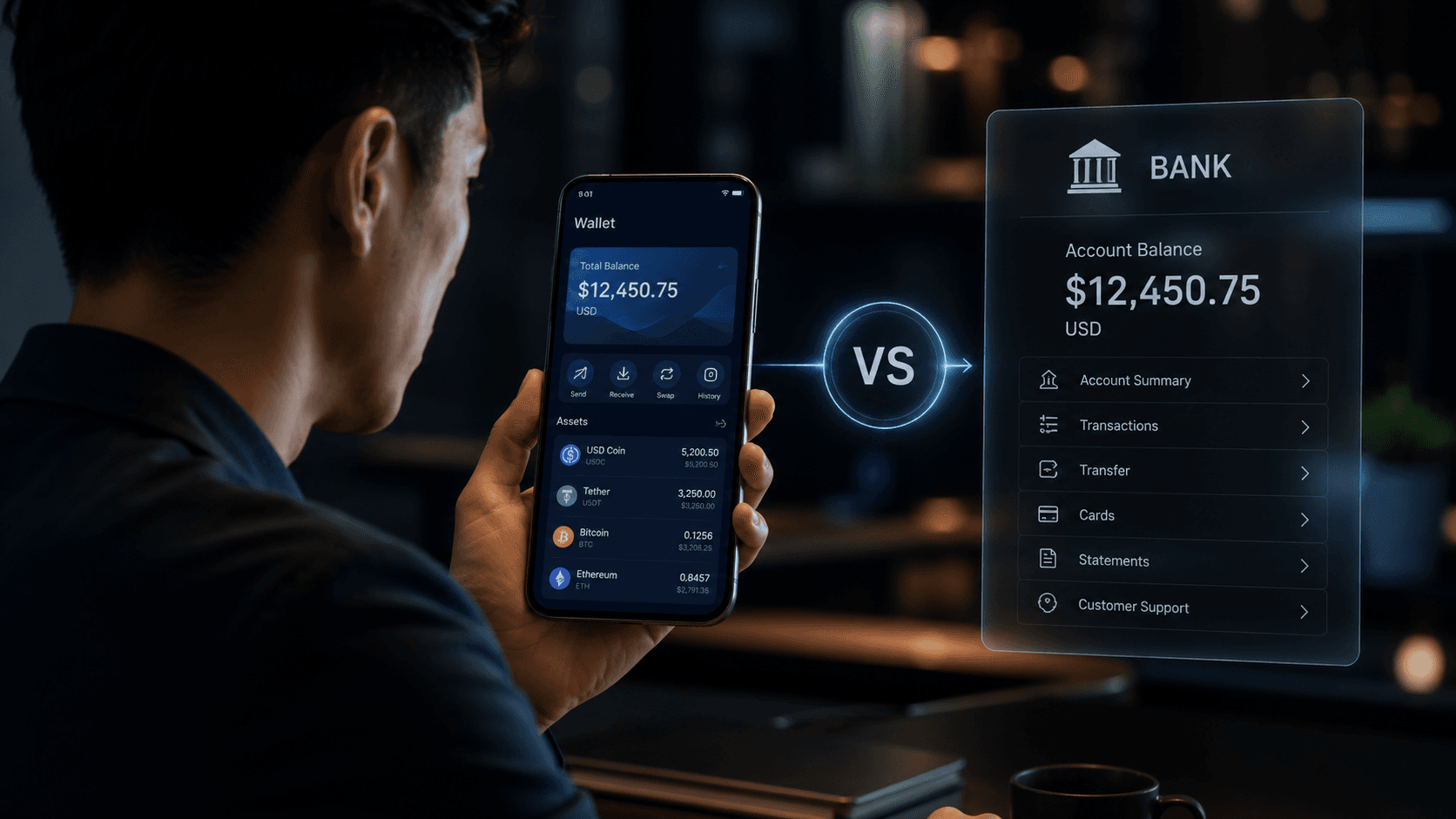
Digital payments are now part of everyday life. People tap their phones to pay, store cards in secure apps, and review transactions instantly. Because the experience is so seamless, digital wallets and bank accounts are often treated as interchangeable. In reality, they serve different roles. A digital wallet is primarily a payment interface, while a bank account is where funds are held and officially recorded.
What is a digital wallet
A digital wallet is an app that stores payment credentials and other digital items you would normally keep in a physical wallet. It can store electronic versions of debit and credit cards, and often other items such as loyalty cards, tickets, or passes. It is designed to make checkout fast and convenient, both online and in store.
Most digital wallets work by linking to an existing funding source, such as a debit card, credit card, or sometimes a bank account. The wallet presents your payment credentials securely and helps complete the transaction without needing to type card details each time.
What is a bank account
A bank account is a financial account maintained by a bank that holds your funds and supports broader money management. It is where balances are recorded, statements are generated, and services such as transfers, deposits, withdrawals, and other banking functions are managed.
Key differences between a digital wallet and a bank account
1) What they are built to do
A digital wallet is built for payment convenience. It helps you pay quickly by using stored credentials and device authentication.
A bank account is built to hold funds and support a wider set of financial services and record keeping.
2) Where the money sits
In most common setups, a digital wallet does not hold your money in the way a bank account does. It stores the payment method and passes the payment instruction through to the linked card or account. A bank account is where the balance is actually held and maintained by the institution.
Some wallets can store balances depending on the provider, but the core idea remains. The wallet is the payment layer. The bank account is the custody and ledger layer.
3) Security and protection model
Digital wallets commonly use device based security such as encryption, tokenisation, and biometric authentication to protect payment credentials.
Bank accounts operate under banking security controls and regulatory frameworks that govern how deposits are safeguarded, how transactions are monitored, and how consumer protections are applied.
4) Everyday capabilities
Digital wallets are great for speed at checkout and contactless payments. They can also centralise multiple cards and reduce friction across apps and stores.
Bank accounts support broader financial activity such as receiving salary, making bank transfers, paying bills, maintaining savings structures, and generating formal statements that are commonly needed for reporting.
5) Reporting and reconciliation
Wallet apps often show wallet activity, but bank accounts are usually the primary source of truth for account statements and transaction records that support formal tracking, audits, and financial reporting.
How they work together
In everyday life, most people use both. A bank account funds your financial life. A digital wallet makes spending smoother by acting as the front end payment experience.
That is why it is rarely a choice between one or the other. They often serve different layers of the same flow.
Which one should you use
A digital wallet is a good fit when:
- you want faster checkout and contactless payments
- you want multiple cards stored securely in one place
- you prefer mobile first spending across apps and stores
A bank account is essential when:
- you need a primary place to hold funds
- you rely on statements and clear transaction records
- you need broader banking functions like transfers and formal account management
Conclusion
A digital wallet is designed to make payments easy. A bank account is designed to hold money and provide the underlying financial record. Once you separate the payment interface from the account where funds are stored and tracked, the difference becomes clear and it becomes easier to choose the right tool for the right job.