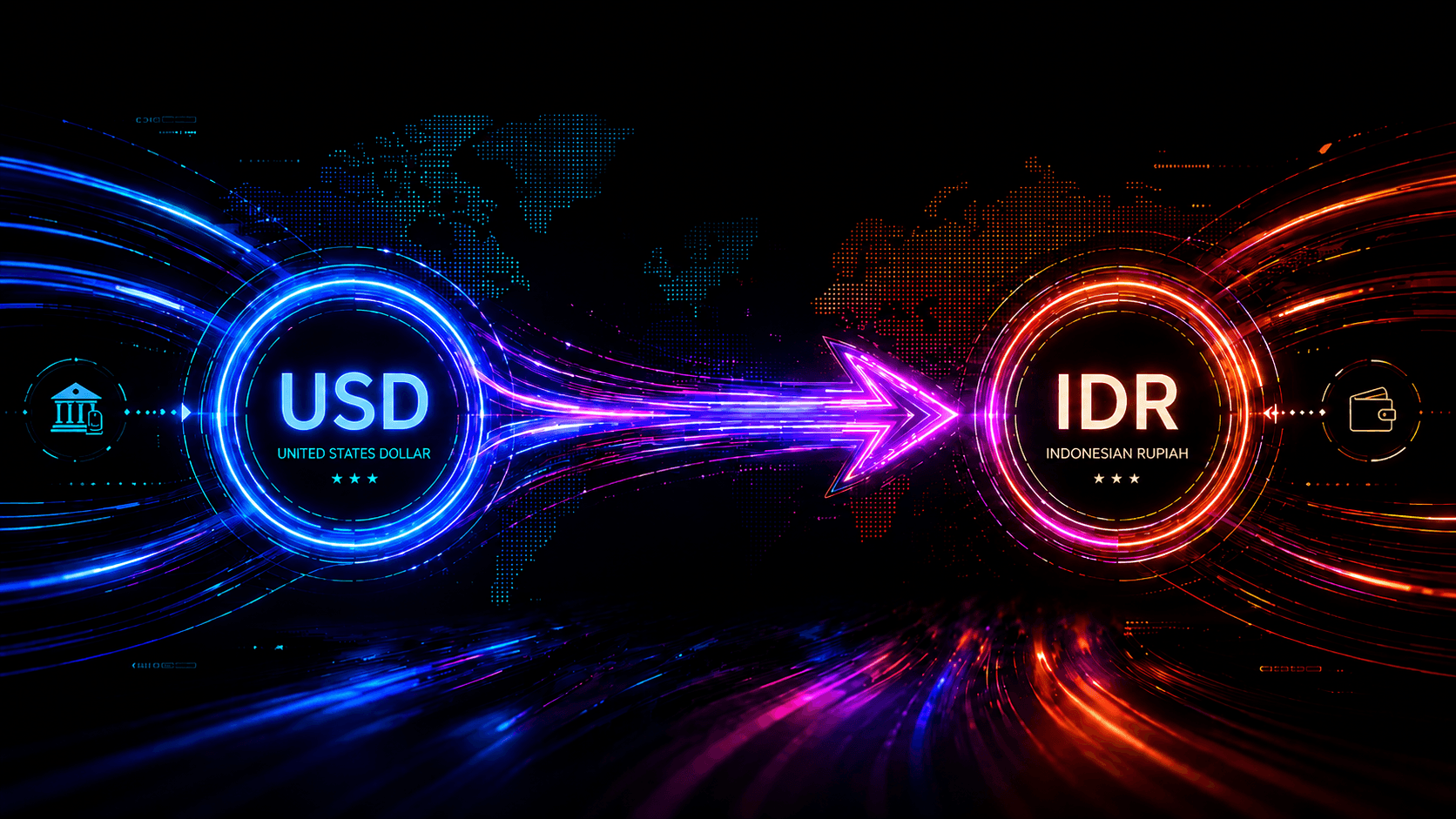
Send Money From USD to IDR
Indonesia is a common destination for both personal support transfers and commercial payments, but USD to IDR works best when you treat it like a controlled process, not a one click transfer. Identity checks, recipient verification, and a clear payment purpose are normal, and higher value transfers often face stricter review and document requests.
Step 1: Choose how the recipient will receive funds
Most USD to IDR transfers are delivered through one of these options.
Local bank account in Indonesia
This is the default route for formal payments and higher amounts. It usually provides the cleanest paper trail, since the credit lands directly into the recipient’s bank account with references that can be matched to an invoice, salary, or personal support purpose.
Mobile wallet payout such as Touch n Go
This is practical for smaller transfers where the recipient prefers to receive funds into a wallet they use day to day. Wallet payouts can be fast, but they commonly come with tighter per transfer limits and acceptance limits that depend on the wallet account verification level.
Regulated fintech platforms such as INFII or Wise
Some senders prefer regulated fintech platforms because they offer clearer quotations and a smoother sending flow. Transfer limits and supported routes vary by platform, so the best option depends on the provider you use.
Step 2: Decide which amount is fixed
This decision prevents most disputes.
Invoice or obligation is in IDR
Treat the IDR amount as fixed. Manage conversion so the intended IDR outcome is protected.
Payment is defined in USD
The recipient’s IDR amount can vary depending on the rate, the timing, and where conversion happens.
Most “the amount changed” conversations happen because this was not decided upfront.
Step 3: Expect more questions on purpose and documentation
USD to IDR transfers can be more purpose sensitive than other corridors. Banks and providers may require a payment purpose and supporting context, especially when amounts are larger or the transfer pattern is frequent. If the purpose is unclear, transfers can pause for clarification.
Prepare these early to reduce delays.
- A clear purpose that matches the transaction
- An invoice or contract for commercial payments
- A short explanation of the relationship for personal support transfers
Using a description that reflects the real transaction helps reduce back and forth during review.
Step 4: Know the practical limits by channel
Limits vary by provider and payout type, but the pattern is consistent. Bank transfers generally allow higher limits than wallet payouts.
Even when your provider supports a higher limit, the recipient’s bank or wallet may still apply its own acceptance limits. When a payment is near a threshold, the transfer may need to be split, routed differently, or supported with additional documents.
Step 5: Reduce FX and fee leakage before you send
Most cost issues come from two places.
FX spread
The rate you see on Google is usually a mid market reference rate. Providers commonly apply a spread, so your effective rate is different.
Route fees
Transfer fees can include provider fees and sometimes intermediary deductions depending on the route.
A practical pre send check.
- Compare a mid market reference rate for context
- Confirm the quoted rate you are being offered
- Check whether the rate is locked before execution
- Review the all in cost, including any transfer fees
- Confirm whether the recipient will receive a fixed IDR amount or a variable outcome
This turns FX from an after the fact issue into an intentional decision.
Step 6: Get the recipient details exactly right
Most delays are data problems, not money problems.
Confirm these items before you send.
- Recipient legal name matches the bank or wallet record
- Account or wallet details are correct
- Payment reference is clear, especially for invoices or payroll
- Recipient contact details match what the payout method requires
Small mismatches can trigger repair, and repairs are where time is lost.
Step 7: Plan timing like a finance team
USD to IDR transfers are affected by cut off times, time zone differences, weekends and public holidays, and review windows when additional information is required.
For recurring payments, sending earlier in the day and using a consistent schedule reduces operational noise and last minute urgency.
Common problems with USD to IDR transfers
Most issues fall into a few predictable categories.
- Transfer paused due to unclear purpose or missing documents
- Conversion outcome differs because the rate was not confirmed upfront
- Wallet or recipient side limits block the credit
- Beneficiary mismatch triggers repair
- Delays around cut off times, weekends, or holidays
- Additional review on larger or frequent transfers
How INFII helps
INFII is a full fledged platform to receive, store, convert, and send value seamlessly, with clear FX quotes, real time tracking, and reconciliation ready reporting. Fast payment supports same day delivery where available, while large value transfers use the right rails with strong controls. As a fully licensed and regulated platform, INFII offers a more dependable and transparent alternative to fragmented providers, whether you are making a personal transfer or running repeat business payments.
With INFII
- Transfers above USD 100 thousand can be executed via SWIFT for settlement
- Transfers below USD 10 million can be executed via fast payment routes from your INFII account, with same day settlement.
Crypto option: Pay in HKD using digital assets
INFII also supports a crypto to fiat route. With on and off ramping built into the platform, users can convert between crypto and fiat instantly and settle in HKD when needed. This gives businesses more flexibility. Value can be received or held in digital assets, converted into HKD at the point of execution, and sent out through the appropriate payment rail based on the transfer value and corridor requirements.